Stretching for kilometres across the Atlantic, dense mats of golden-brown seaweed, known as pelagic Sargassum, float just beneath the surface, forming mobile marine habitats for fish, turtles, and other wildlife. When conditions are right, Sargassum can form huge blooms. Historically, these were of little concern to coastal communities, but since 2011, the scale and frequency of blooms arriving at the coastlines of the tropical Atlantic, Caribbean, Gulf of Mexico, and West Africa have surged. There, massive rafts of Sargassum are disrupting fisheries, choking beaches, harming tourism and public health, and placing increasing strain on coastal economies.
At the United Nations Ocean Conference (UNOC3) in Nice, France, GEO Blue Planet co-hosted its official Side Event Turning the Tide: Advancing Science, Solutions, and Cooperation on the Tropical Atlantic Sargassum Situation. Although UNOC3 has now passed, the discussions and momentum the Side Event generated remain very much alive. Let’s take a moment to revisit what happened.
International representation
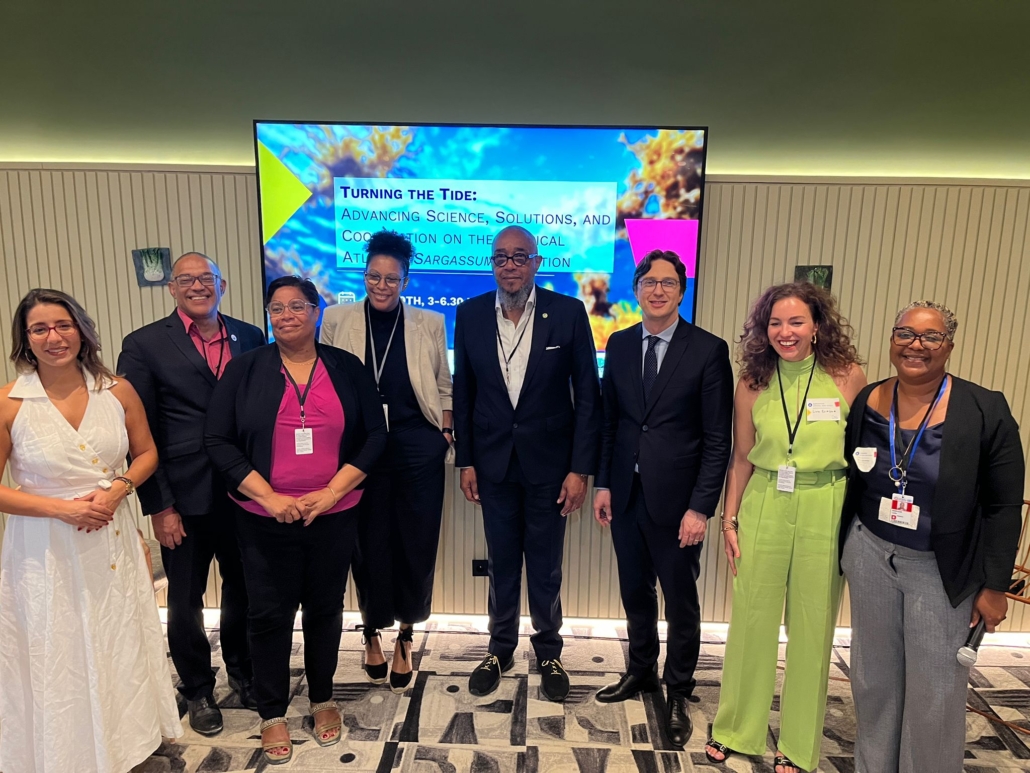
From left to right: Claudia Taboada (Dominican Republic), Christopher Corbin (Cartagena Convention Secretariat and Caribbean Environment Programme UNEP-CEP), Sylvie Gustave Dit-Duflo (Région Guadeloupe), Ambassador Safiya Sawney (Government of Grenada), Ambassador Colin Murdoch (Eastern Caribbean States – OECS), Ambassador Arnaud Mentré (French Government), Livia Eliasova (European Commission DG International Partnership DG INTPA), and Lydia Barfleur (Région Guadeloupe)
The event brought together 83 in-person participants and 116 online, and speakers from 14 institutions. This broad international mobilisation, including Ministries representatives from Grenada, Dominican Republic, Trinidad and Tobago, Costa Rica, and France, the Organisation of Eastern Caribbean States, and the Association of Caribbean States, offered rich, diverse perspectives on a challenge that is both local and global.
John Auckland (Seafields Solutions Ltd), and Aurelie Rossignol (World Bank) presented in the “Sargassum from sea to shore: Advancing Science for Solutions” session. Dr Audrey Hasson (Executive Director, GEO Blue Planet), Gabrielle Larricq (French Government), Ludovic Mollier (Collective Scientific Assessment of IRD), Jane Nurse (EC Global Gateway Grenada Task Force), and Lucile Rossin (UNEP/SPAW-RAC) joined the panel discussion “The synergies of cooperation for Sargassum: Building Bridges Through Science and Policy,” chaired by Charlotte Gully (Ademe).
The event took place following a UNOC Blue Zone side-event entitled “Sargassum Crisis: Regional Cooperation and Response Towards New Opportunities” from the Ministry of Foreign Affairs of Dominican Republic, Government of Dominican Republic, Guadeloupe Region, France, Development Bank of Latin America and the Caribbean (CAF), SPAW-RAC (Regional Activity Center for Specially Protected Areas and Wildlife of the Caribbean), UN Environment Programme, Secretariat of the Cartagena Convention, and Secretariat of the Abidjan Convention. At this Blue Zone event, France, Costa Rica, Mexico and the Dominican Republic presented the International Action Plan for the Management of Sargassum Floods. Developed in consultation with States and regional organisations, the plan outlines a shared framework for action and identifies key phases of response to the crisis.
Discover the key insights from the event co-hosted by GEO Blue Planet below.
Understanding a multidimensional challenge
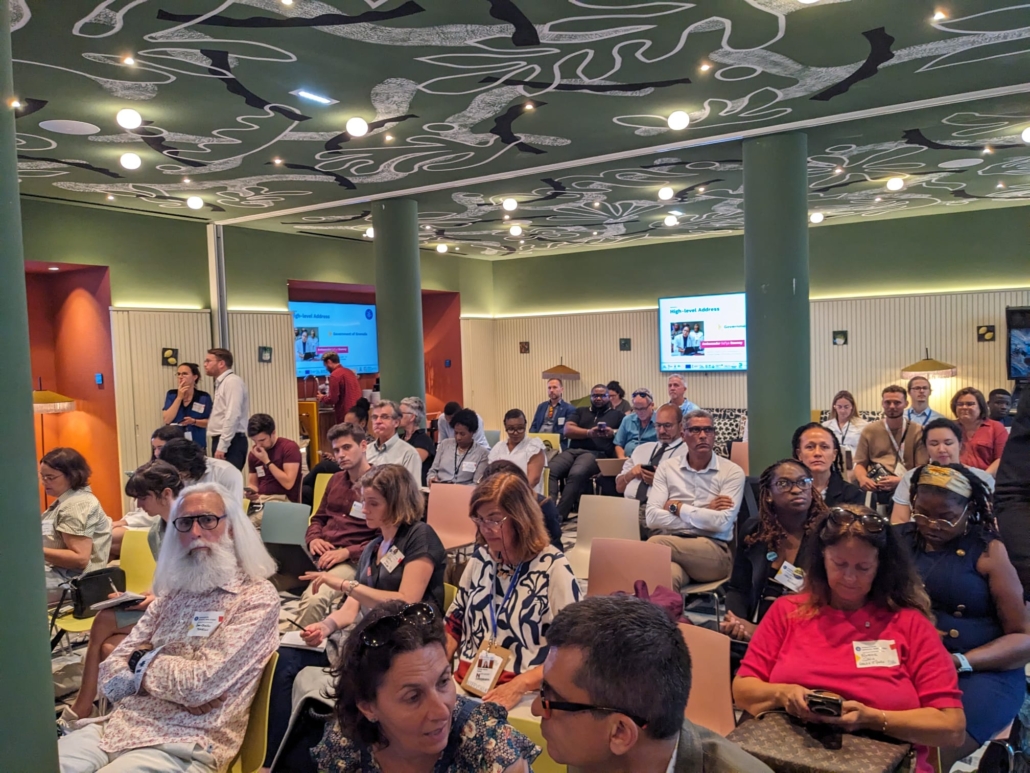
From impacts on biodiversity to the economy to public health, the event highlighted how the challenges posed by Sargassum are complex and multifaceted. Speakers shared examples demonstrating how the impacts vary dramatically by location. In some coastal areas, hotel groups absorb the cost of removal to maintain tourism, while in others, small-scale communities and fishers are left to bear the burden.
The transboundary nature of the crisis requires regional and international cooperation. Tailored, context-specific responses are essential, alongside better coordination between national ministries and agencies. Participants stressed the need to scale up local solutions while building regional frameworks that promote knowledge-sharing and policy alignment.
Science as the foundation for action

Caption: From left to right, Charlotte Gully (Ademe), Audrey Hasson (GEO Blue Planet), Jane Nurse (EC Global Gateway Grenada Task Force), Gabrielle Larricq (French Government), Lucile Rossin (UNEP/SPAW-RAC), and Ludovic Mollier (Collective Scientific Assessment of IRD)
Presenters emphasised that science must guide decision-making, but that action cannot wait for perfect data. A better scientific understanding of Sargassum dynamics, such as the drivers of blooms, seasonal variability, and ecological role, is still needed. At the same time, the focus must remain on practical, applicable questions that can inform immediate responses on the ground.
Earth observation satellites, AI-based forecasting, and in-situ monitoring were all seen as essential tools for predicting and preparing for Sargassum events. Improving data resolution at the island level, particularly in the Caribbean, as it consists of small islands, was identified as a key priority.
Examples of effective science-policy collaboration were shared, including stakeholder-driven processes such as systematic reviews, interdisciplinary committees, and creative public outreach through podcasts and comics. Initiatives like GEO Blue Planet are helping bridge the gap between data and real-world decisions. In its Sargassum Working Group, technical experts and representative end users are working together on scientifically backed community-led solutions.
Turning a hazard into an opportunity
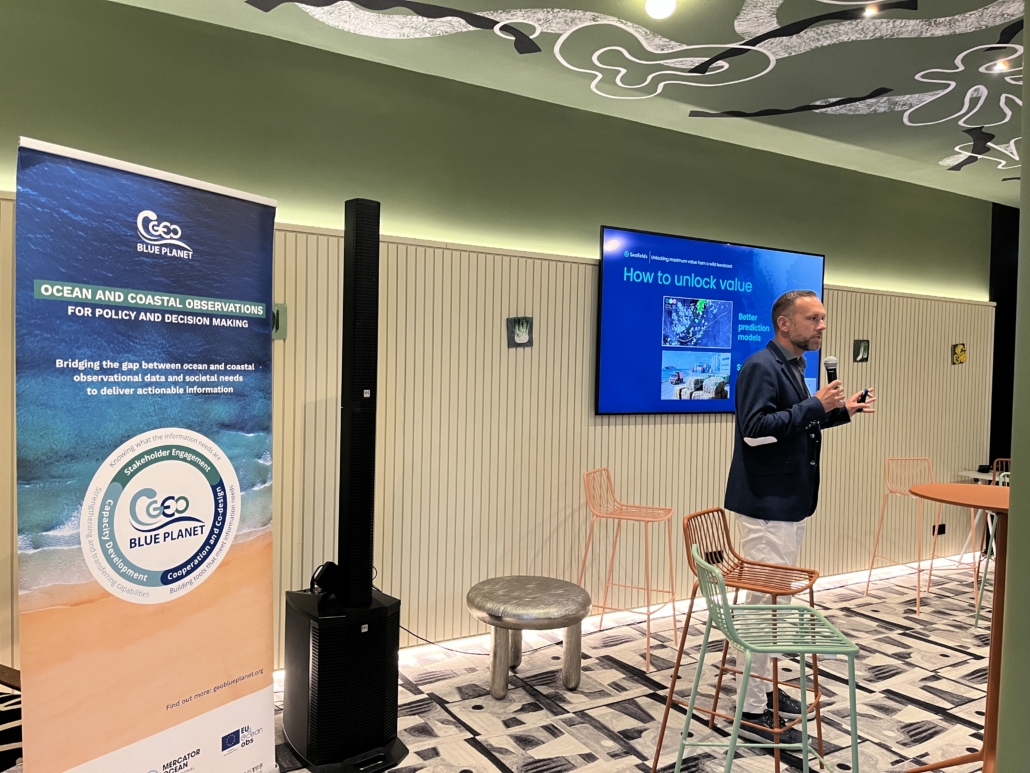
John Auckland from Seafields Solutions Limited
The conversation also explored how Sargassum could be reimagined as a resource rather than just a problem. Offshore collection, though technically challenging, was presented as a promising area for investment, especially when co-developed with local fishing communities. One speaker described a novel method of storing Sargassum at sea, while others pointed to its role as a nursery habitat for fish and potential draw for snorkelling tourism.
Efforts to valorise Sargassum, such as converting it into fertiliser, construction material, or bioenergy, are beginning to gain momentum. However, speakers warned that regulation will be needed to manage access and avoid future conflicts. Currently, anyone can harvest Sargassum, but as its economic value grows, so too will the need for coherent governance and management plans.
Harnessing political momentum for regional change
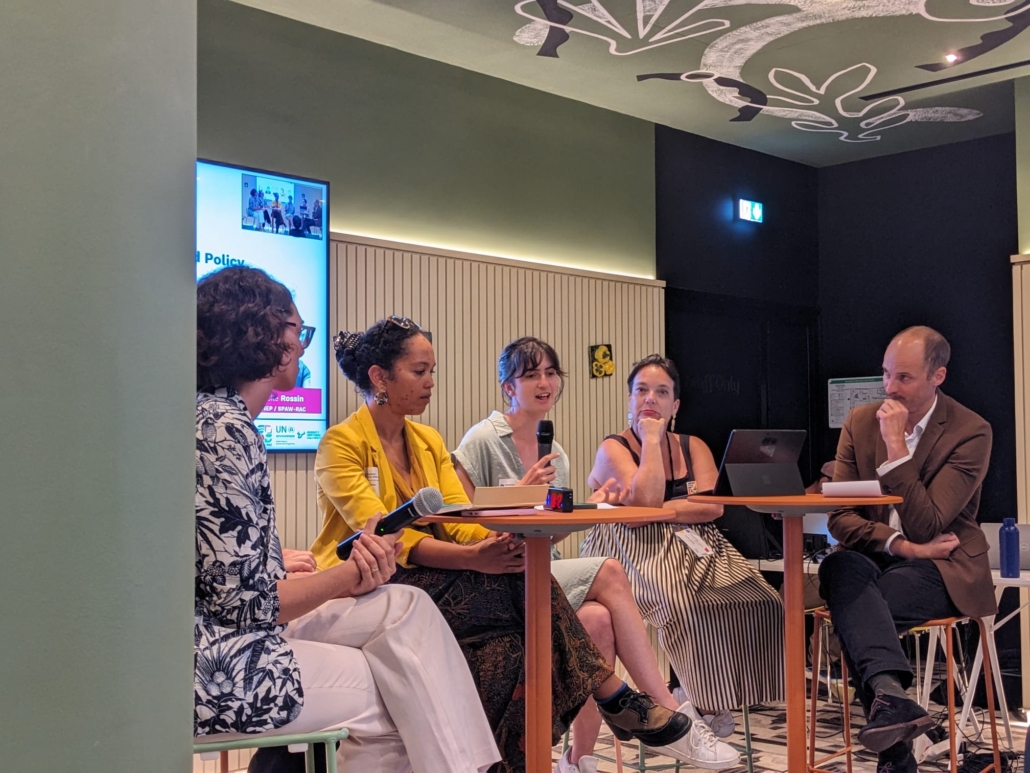
From right to left, Dr Ludovic Mollier (IRD), Lucie Rossin (UNEP/SPAW-RAC), Gabrielle Larricq (Government of France), Jane Nurse (Global Gateway), and Dr Audrey Hasson (GEO Blue Planet) (out of shot), and Charlotte Gully (Ademe)
With the Sargassum crisis now squarely on the international agenda, speakers highlighted a range of initiatives and actions that will be leveraging UNOC3’s momentum. These included a push for a legal framework through a mention submitted for the IUCN World Conservation Congress held in October this year, a draft resolution to be tabled at UNEA-7 coming December, calls to establish an international action plan by the French Government and, and the EU Global Gateway programme activities including the 3rd EU-Caribbean Global Gateway Conference on Sargassum, which will take place in Brussels, Belgium, this October.
Participants emphasised that to effectively address the Sargassum challenge, solutions must be grounded in science, shaped by local realities, and supported by regional and global partnerships. The event closed with a call to continue building coalitions, strengthening the science-policy interface, and investing in knowledge-based action to safeguard ocean resilience and support sustainable blue economies.
Many thanks to all who have made this event a success.
GEO Blue Planet would like to thank the event partners, Association of Caribbean States, ADEME, ECS, the European Commission, Expertise France, Instituto de Investigaciones Oceanológicas, Interreg Caraïbes, Marine Biodiversity Observation Network (MBON), Mercator Ocean International, Region Guadeloupe, Seafields Limited, The Sargassum Podcast, Trinidad and Tobago’s Institute of Marine Affairs, SPAW-RAC, UN Environment Programme, and University of South Florida College of Marine Science.
GEO Blue Planet also extends its heartfelt thanks to all the speakers whose contributions made these events possible.
High-level speakers included session Chair Lydia Barfleur (Région Guadeloupe), Claudia Taboada (Dominican Republic), Sylvie Gustave Dit-Duflo (Région Guadeloupe), Ambassador Arnaud Mentré (French Government); Ambassador Safiya Sawney (Government of Grenada), Ambassador Colin Murdoch (Organisation of Eastern Caribbean States), Noemi Espinoza Madrid (Association of Caribbean States), and Christopher Corbin (Cartagena Convention Secretariat and Caribbean Environment Programme).
The event also featured direct testimonies from the field by Ambassador Jerry Enoe (Grenada), and Frédérick Voyer (Martinique). Dr Nikia Gooding (Institute of Marine Affairs, Trinidad and Tobago), Cindy Fernández García (University of Costa Rica), John Auckland (Seafields Solutions Ltd), and Aurelie Rossignol (World Bank) presented in the “Sargassum from sea to shore: Advancing Science for Solutions” session. Dr Audrey Hasson (Executive Director, GEO Blue Planet), Gabrielle Larricq (French Government), Ludovic Mollier (Collective Scientific Assessment of IRD), Jane Nurse (EC Global Gateway Grenada Task Force), and Lucile Rossin (UNEP/SPAW-RAC) joined the panel discussion “The synergies of cooperation for Sargassum: Building Bridges Through Science and Policy,” chaired by Charlotte Gully (Ademe)