
46th COSPAR SCIENTIFIC ASSEMBLY
Session A0.2: COASTAL RESILIENCE TO HAZARDS: BRIDGING THE GAP BETWEEN EARTH OBSERVATIONS AND USER NEEDS
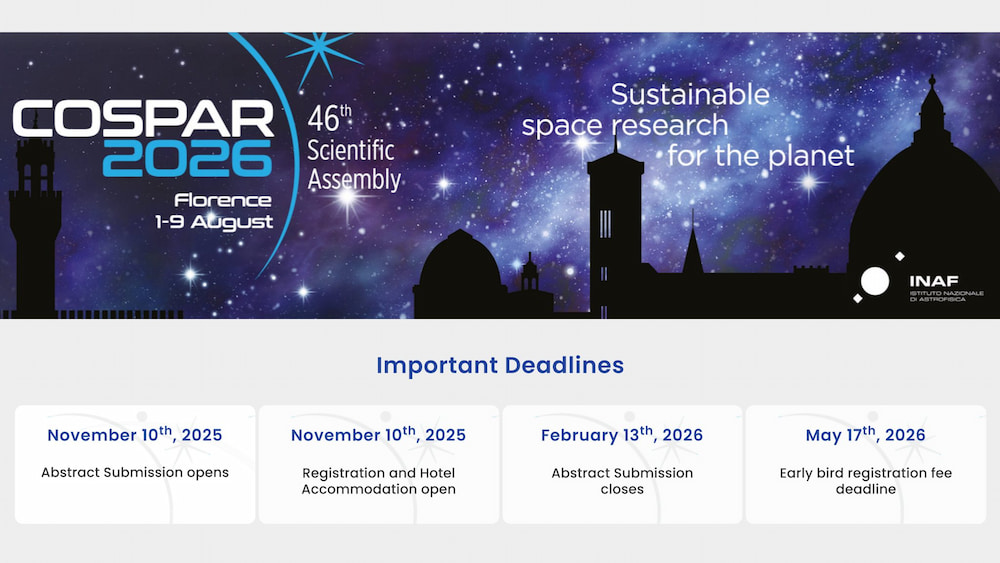
More informations:
Coastal zones, home to vital ecosystems and growing populations, face severe threats from climate change, rising sea levels, hurricanes, tsunamis, and coastal erosion, all intensified by human activities. Enhancing coastal resilience has become a priority for governments and environmental advocates. However, understanding coastal processes is hindered by data gaps and the challenge of integrating satellite observations, in-situ data and modelling capacities. The CEOS COAST initiative addresses these challenges through pilot projects—Land 2 Sea and Sea 2 Land—focused on coastline changes, flooding, and land-based nutrient transfer into oceans. The GEO Blue Planet initiative contributes to this topic by facilitating data integration for improved decision-making around specific topics including Sargassum, marine litter pollution or eutrophication. Through CEOS and GEO Blue Planet, stakeholders are engaged in co-designing solutions to enhance coastal data products, bridging the gap between scientific knowledge and decision-makers’ needs. These efforts advance climate change adaptation and foster sustainable development across coastal regions. Please submit abstracts reporting your work in the Coastal Zone to this session.
The Purpose of COSPAR, by its Charter from the International Council for Science (ICSU), now the International Science Council (ISC), is “to promote at an international level scientific research in space, with emphasis on the exchange of results, information and opinions, and to provide a forum, open to all scientists, for the discussion of problems that may affect scientific space research. The objectives of COSPAR are to be achieved through the organization of scientific assemblies, publications, or any other means.”
COSPAR Scientific Assemblies are held every two years (even numbered years). These events attract currently between 2000 and 3000 participants.