How can we empower youth?
As a partner of the Early Career Ocean Professional (ECOP) Ocean Decade Programme and co-coordinator of the OceanBRIDGES Task Force (Bridging ocean Research, Innovation and Diversity across Generations of Experts and Stakeholders), GEO Blue Planet works to ensure meaningful participation of Early Career Ocean Professionals (ECOPs) in high-level events to have their voices heard in international fora and policymaking, in intergenerational dialogues learning from senior positions but also bringing their own fresh perspectives, thus empowering the next generation of ocean leaders.
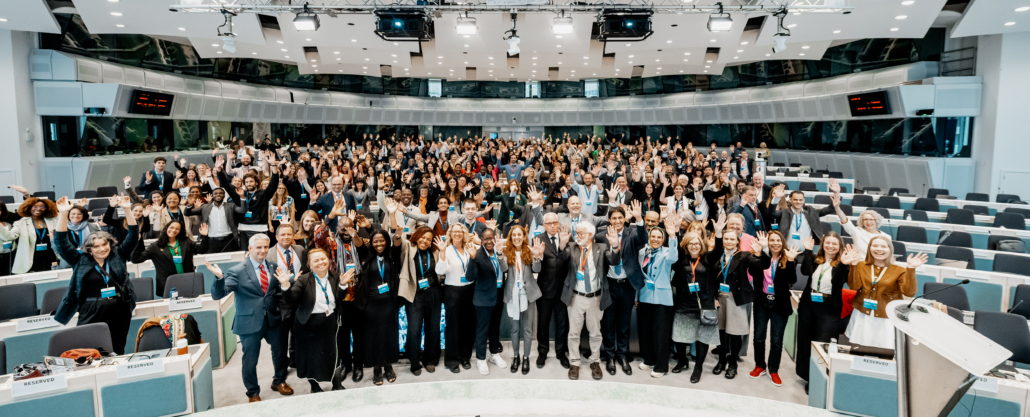
In September 2025, high-level officials, scientists, and civil society leaders gathered in Brussels, Belgium, for the 2025 All-Atlantic Forum organised by the All-Atlantic Ocean Research and Innovation Alliance (AAORIA).
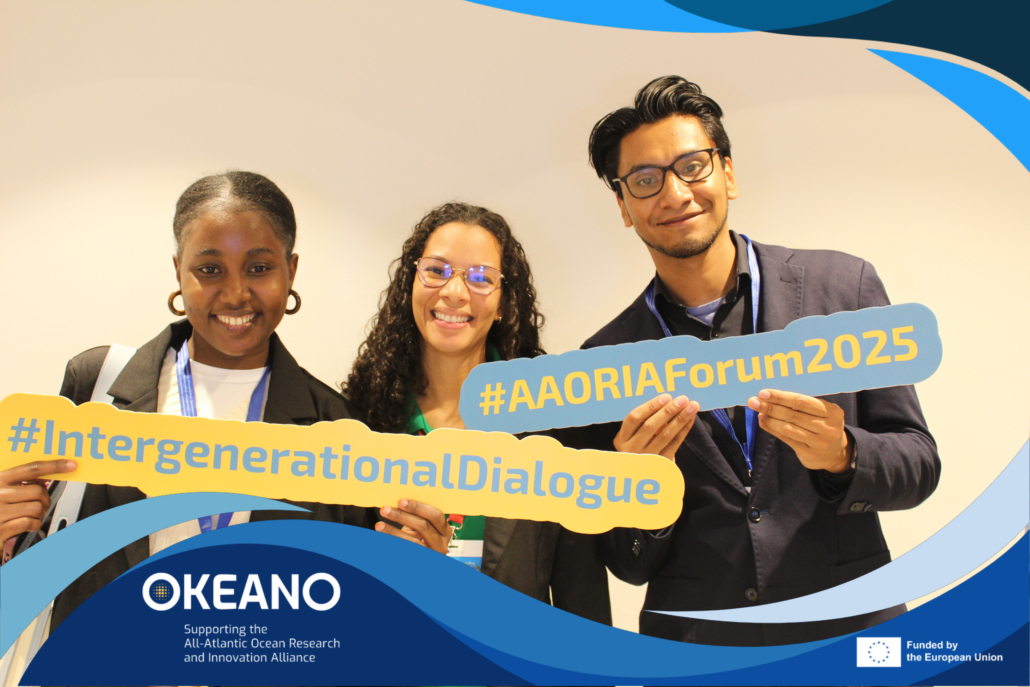
With funding from the EU4OceanObs project, we were proud to support two Early Career Ocean Professionals (ECOPs) in attending and contributing to the 2025 All-Atlantic Forum. Uriel de Jesús Mendoza Castillo is pursuing a Master’s degree in Geospatial Information Sciences at CentroGeo, Mexico, where he is developing a national web platform to monitor massive sargassum arrivals in the Mexican Caribbean. Kardiatou Samba Sall, from Senegal, will begin a PhD at the University of Montpellier exploring coastal risks and adaptation pathways in Senegal’s coastal areas.

Uriel (right) and Kardiatou (left) with James Morrison (center), Director Healthy Planet DG Research, European Commission
The Forum
Born from the Galway (2013), Belém (2017) and Washington (2022) processes, AAORIA brings together Atlantic nations to tackle shared challenges such as ocean warming, sea-level rise, biodiversity loss, pollution, and overexploitation. The 2025 All-Atlantic Forum reaffirmed this collaborative spirit with two strategic pillars: coastal resilience, and ocean observation and modelling.
These priorities support co-designed solutions with governments, communities, and scientists, including frameworks and indicators for ecosystem-based restoration, such as mangroves and seagrass beds, as well as interoperable data platforms, such as Copernicus Marine, the Digital Twin of the Ocean, and GOOS best practices, to inform policy decisions.
Key initiatives were launched or consolidated, including the Network of Coastal Resilience Beacon Sites, the Ocean Observation and Modelling Work Plan recommendations, and the Blue Intergenerational Programme, which connects early-career professionals with senior experts.
“The All-Atlantic Forum provides a unique space for intergenerational exchange and networking with experts and peers working on coastal resilience and ocean observation,” said Kardiatou. “Participating in this event will allow me to expand my knowledge, share my experiences, and inspire my future research on coastal risk adaptation in Senegal.”
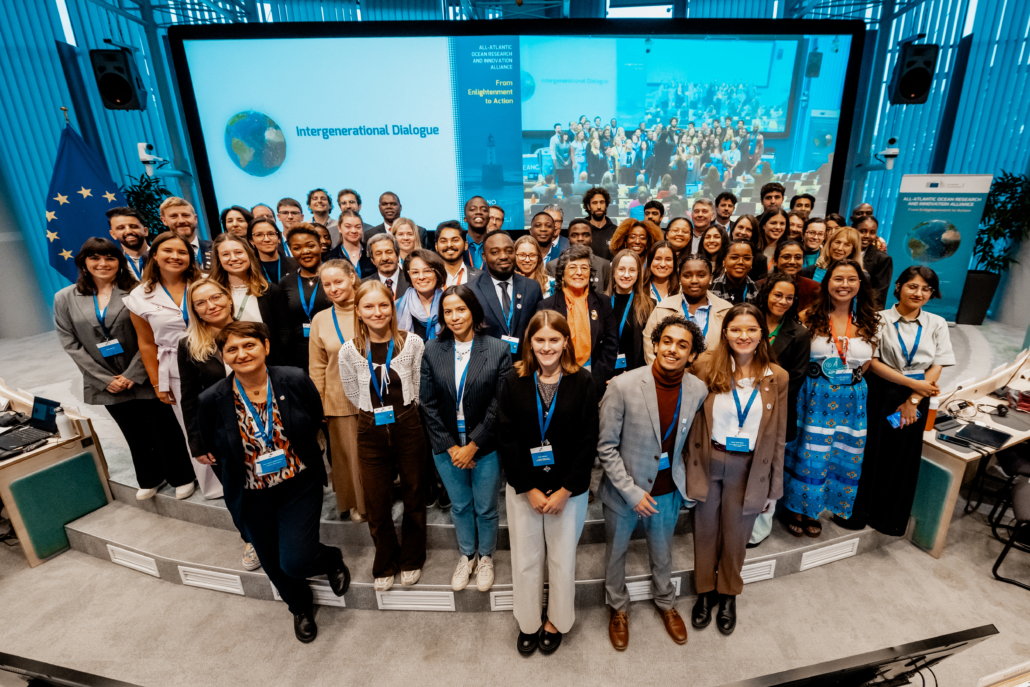
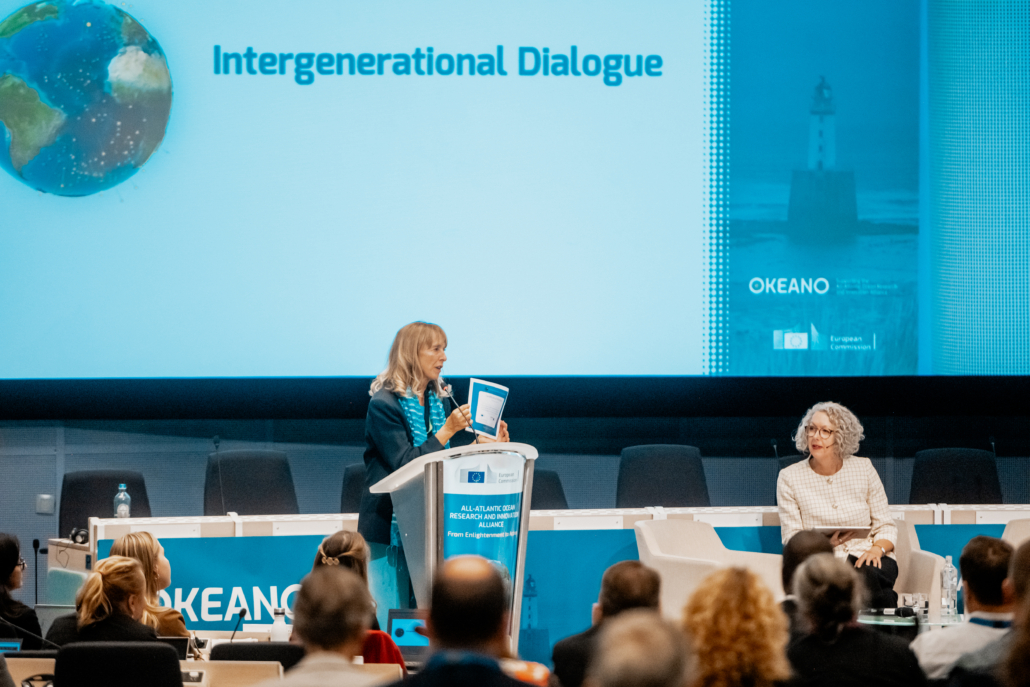
The Intergenerational Dialogue Session
Among the side events at the Forum was the Intergenerational Dialogue Session. This annual event provides ECOPs with a dedicated platform to collaborate with senior experts to co-develop solutions for pressing Atlantic Ocean challenges.
Uriel and Kardiatou participated in a group focusing on monitoring, protecting, and restoring marine ecosystems and biodiversity. The group proposed creating an All-Atlantic Coastal Resilience Knowledge Hub, which would serve as a collaborative platform combining ecological data, satellite products and community knowledge to support decision-making on coastal resilience.
The Intergenerational Panel concluded with the co-development of a outlining recommendations for integrating scientific, community, and youth perspectives into future AAORIA actions.
Towards a resilient Atlantic
Discussions highlighted the need to turn ocean data into practical governance tools for resilience and sustainability. Participants explored ways to achieve this through transdisciplinary collaboration, regional cooperation, capacity building and inclusive education, linking data, technology and communities to support evidence-based decisions across the Atlantic.
“This event represents a great opportunity to build connections for future research and collaborative work on ocean-related issues,” said Uriel. “Addressing the challenge of Sargassum in Mexico requires international cooperation and public policies. As part of the academic research community, I see this event as a key space to exchange ideas and reflect on how to propose policy recommendations within international organisations.”
The next Forum will be held in Salvador, Brazil, on 15–16 April 2026.

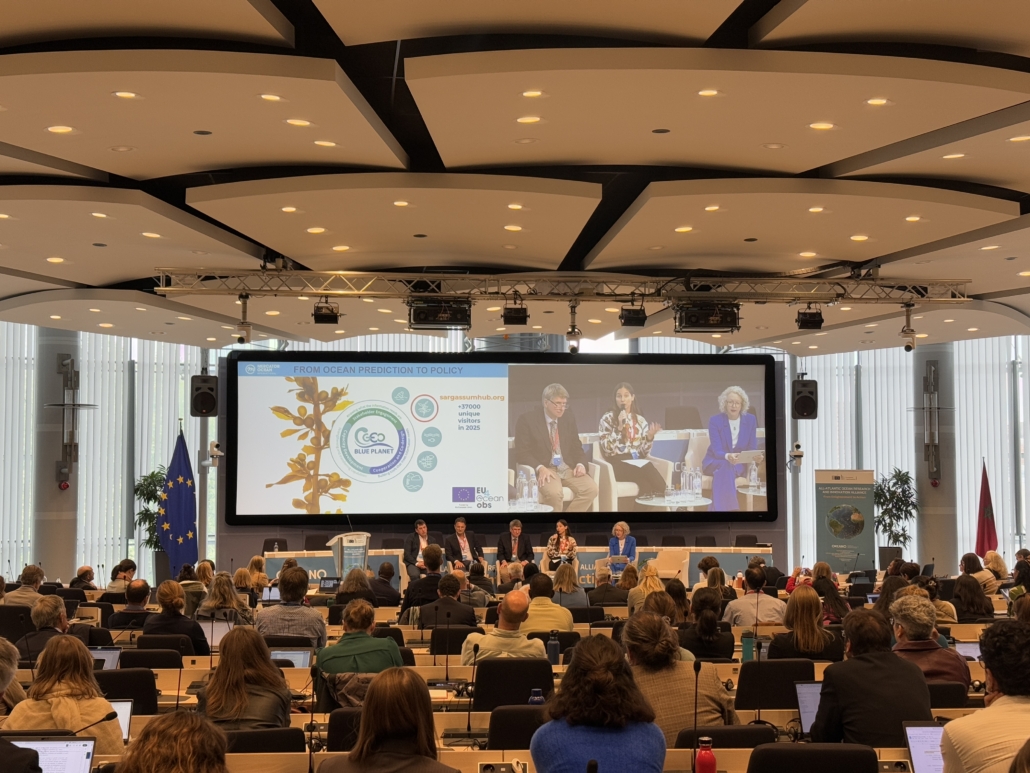
The Pitches from projects and case studies: presentation of Sargassum Information Hub
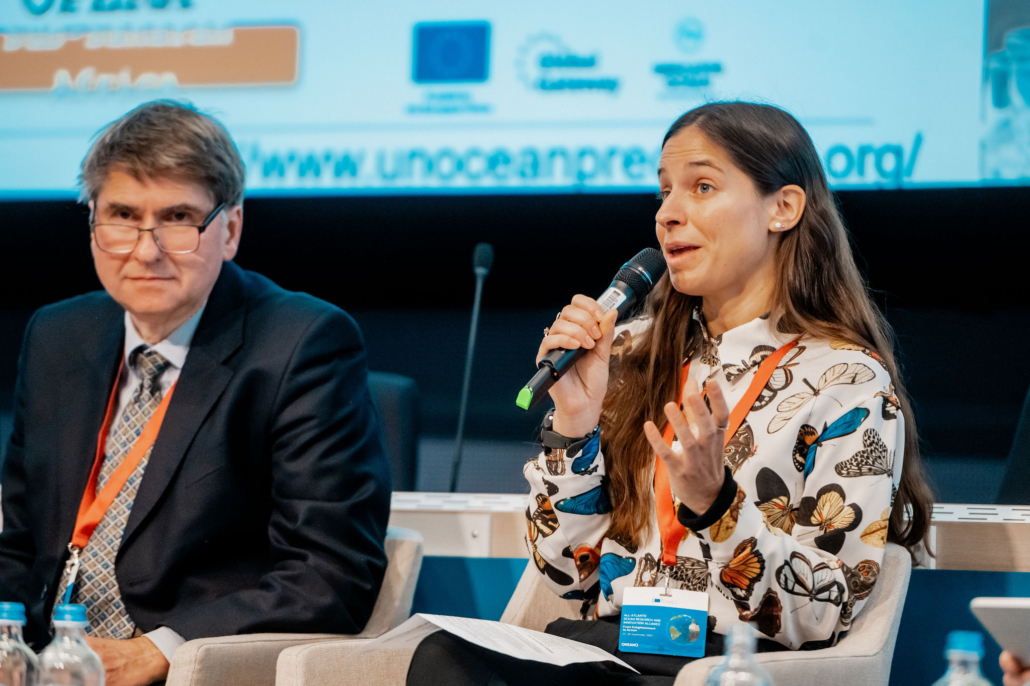
GEO Blue Planet was also presented by Valentina Giunta (Mercator Ocean International). She also introduced the OceanPrediction DCC with a focus on the project OPERA in sub-Saharan Africa & Ocean Prediction For Costa Rica (OP4CR).
She especially presented our Sargassum Working Group & development of the Sargassum Information Hub that has attracted more than 37,000 unique visitors just this year by providing access to real-time monitoring tools, bulletins & best practices for sargassum management.