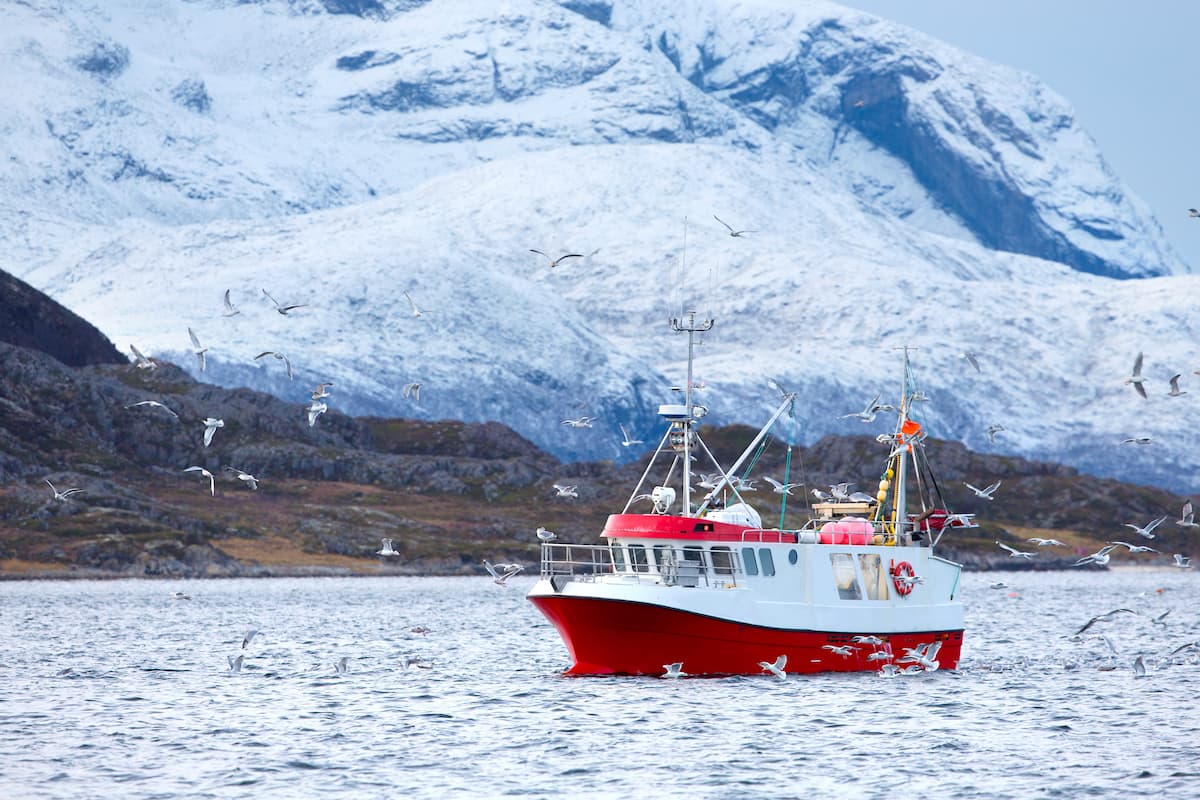
Fisheries and aquaculture play a vital role in global food security and the livelihoods of people in coastal and island communities. However, managing them sustainably is becoming harder. Overfishing, illegal, unreported, and unregulated fishing, pollution, habitat degradation, and shifting ocean conditions as a result of climate change complicate fisheries management, and gaps in available data make effective decision-making harder still.
The role of Ocean Observations
Ocean Observations provide the foundation for more informed fisheries management. By combining satellite data, in situ measurements, and models, they deliver a consistent and increasingly detailed picture of ocean conditions across the world.
Satellites can detect subtle changes in ocean colour that reveal where phytoplankton – tiny marine plants – are blooming. Because phytoplankton underpin the entire marine food web, their distribution strongly influences where fish populations are found. Combined with measurements of water temperature, salinity, and currents, this builds a working picture of where different species are likely to be found. The same data can flag areas of poor water quality or harmful algal blooms that could spell disaster for aquaculture operators. Radar imagery adds another layer, helping to identify vessels operating in sensitive areas or outside reported fishing grounds.
European services play a central role in delivering these capabilities, with the Copernicus Marine Service providing free and open access to ocean data and forecasts. This information enables fisheries managers, researchers, and others to monitor and predict marine conditions globally.
From data to decisions: supporting fisheries management
For ocean data to support sustainable fisheries, it needs to be analysed, modelled, and translated into information that managers can act on.
Ocean Observations feed into models that simulate how marine ecosystems are functioning and how fish populations are likely to respond to changing conditions. Long-term observations spanning multiple years allow scientists to identify trends and improve predictions about species targeted by fisheries. This is increasingly important in the context of climate change, which is causing some species to shift location, become smaller, and even alter survival rates.
Such information is increasingly important to fisheries governance. It supports the implementation of regulations, the setting and adjustment of sustainable catch limits, and the design and management of marine protected and fisheries management areas that can help ensure fisheries are sustainable.
A range of EU-supported tools and services is translating this data into resources that managers and regulators can use directly. Building on the Copernicus Marine Service, the NECCTON project extends ecosystem modelling to cover the full marine environment, adding new data products on fish biomass and pollution that support stock management and marine protected area planning.
Other examples include the Fish Habitat initiative, developed by the European Commission’s Joint Research Centre, which maps essential habitats for key commercial species, including bluefin tuna and hake, providing a practical decision-support tool for fisheries managers. The Global Fishing Watch platform, powered by Copernicus satellite data and machine learning, provides a near-real-time view of vessel activity worldwide, making it possible to monitor fishing pressure and identify potential violations, such as entering fishery closure zones, at a global scale.
The Fisheries Working Group: connecting data and users
The GEO Blue Planet Fisheries Working Group works to ensure that ocean data translates into practical tools and informed decisions for fisheries management. Operating across artisanal and industrial fishing as well as aquaculture, it works with countries and Regional Fisheries Bodies to identify gaps in data availability and promote knowledge sharing across fishing communities.
A core part of the Working Group’s remit is supporting the development of decision-support tools and information services that integrate ocean data into fisheries applications, such as monitoring ecosystem conditions, and helping managers and regulators act on what the data shows.
Underpinning this work is a commitment to capacity development and knowledge exchange, ensuring that ocean data and the tools built on it are accessible and usable across regions and fishing communities worldwide.
Remaining gaps and challenges
Despite significant progress, gaps remain. Limited in-situ data, particularly for small-scale and artisanal fisheries, continues to constrain understanding of resource status and exploitation rates. Uneven access to data and tools means that the benefits of ocean observation are not yet reaching all regions and communities that need them.
Addressing these challenges is a central focus of the GEO Blue Planet Fisheries Working Group’s “Ocean Data to support Global Sustainable Fisheries Management” workshop in April 2026.
Bringing together Regional Fisheries Bodies and Management Organisations, the workshop will showcase the latest advances in ocean data applications and assess the practical barriers these organisations face in integrating ocean data into their decision-making. The aim is to develop concrete recommendations and a collaborative roadmap for improving coordination, resource sharing, and capacity building, ensuring that ocean data solutions are designed with and for the communities that depend on them.
The outcomes will inform the Working Group’s future priorities and contribute to the growing international effort to make ocean data central to sustainable fisheries management.